🧊 Let’s Ditch the Bra Colors: Why We Need to Bring Back Actionable Social Media Challenges
Social media activism has its own virality, but it doesn’t always succeed. The infamous Facebook breast cancer meme, for example, asked women to share cryptic status updates like “I like it on the floor” or “Rebecca, red.” The goal was to raise awareness for breast cancer. As a result, a few confused friends, a flurry of gossip, and a message that went viral—but did not have much real-world impact.
Campaigns like this, often filled with vague or sexual innuendo, may spark engagement, but they fall short of mobilization. They generate buzz, but do they really motivate people?
Now let’s contrast that with the Ice Bucket Challenge, a campaign that combined awareness with action. They didn’t just post cute statuses—they dumped ice water on their heads, filmed it, nominated others, and donated. Why did this campaign raise $115 million for ALS research? Because it was visual, active, fun, and—most importantly—tied to a clear donation request.

Howard B. Levy, C. (2017, August 29)
🤳 Awareness Isn’t Enough. We Need Action.
Even though pink-themed memes are good, we need to change how we engage with causes in this age of short attention spans, flooded timelines, and messages that get lost in seconds. We live in a world where messages get lost in seconds. A status update that says, “I like it on the couch” might get likes—but it doesn’t lead to donations, appointments, or volunteers.
There are three types of challenges we need:
- Engage physical participation (to grab attention),
- Provide clear donation pathways (make it easy to donate),
- Educate while entertaining (we’re doing this for a reason).
🚹 Why Including Men Matters
Historically, breast cancer campaigns have primarily targeted women, which makes sense given that women are statistically more affected. In spite of this, many marketing campaigns have excluded men altogether, often unintentionally, because of the lower prevalence of breast cancer. In the U.S., more than 2,000 men are diagnosed with breast cancer each year and hundreds die from it . Society, A. C. (2025).
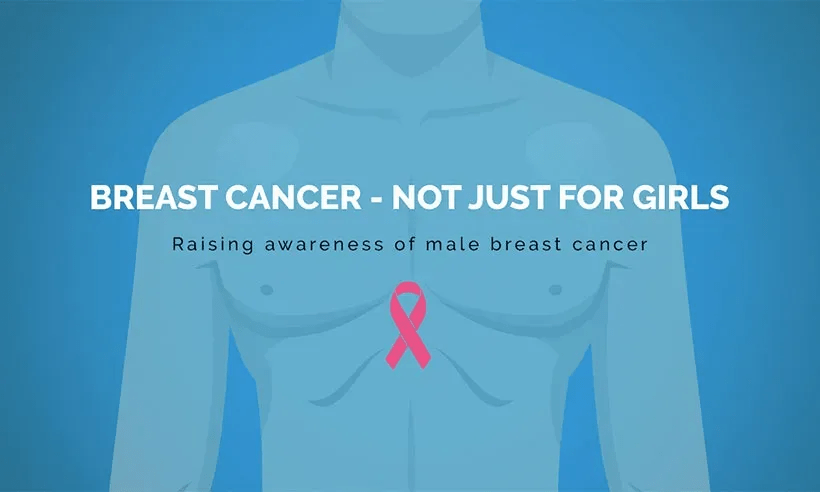
CC, A. (2021)
Let’s face it: inclusion drives awareness. By including men – not just as supporters, but as potential patients – we build communities, foster early detection, and foster allies.
The more inclusive our awareness efforts are, the stronger and more united our impact can be. The more inclusive our efforts are, the stronger and more united our impact will be.
💡 Let’s Bring Back Impactful Challenges
Wouldn’t it be great if October’s Breast Cancer Awareness Month reignited the challenge format? What if people did 20 push-ups in pink in honor of survivors? Or ran a mile for each friend affected? How about posting a donation link alongside each post and tagging five more people to keep the movement going?
Let’s move beyond ‘clicktivism‘ – that kind of awareness that feels good but doesn’t really do anything. Let’s tap into what made the Ice Bucket Challenge so iconic: it was bold, personal, and powerful.
If we’re serious about supporting causes like breast cancer awareness, it’s time to get real, get moving, and make giving contagious again.
🎀 2025 Challenge Idea: The “Pink Push-Up Pledge” 💪💗
This year, let’s act with the #PinkPushUpPledge:
- Do 10 push-ups (or any physical challenge you can do—like a plank, wall sit, or jumping jacks) while wearing something pink.
- Dedicate your reps to someone affected by breast cancer—say their name in your video.
- Donate at least $5 to a breast cancer charity of your choice.
- Tag 3 friends—men, women, nonbinary folks—to take the challenge within 48 hours.
- Use the hashtags #PinkPushUpPledge #MoveForTheCure #BreastCancerAwareness2025 to spread the word.
This year’s pledge is inclusive. Breast cancer doesn’t discriminate, and neither should we. Whether you’re a survivor, supporter, or simply someone who cares, let’s stand (and sweat) together.
💬 What do you think?
Are you in for the #PinkPushUpPledge? Let’s make October a month of real action, inclusive support, and impactful change.
References:
Howard B. Levy, C. (2017, August 29). Redeeming value of social media: How the ice bucket challenge invigorated the ALS Association. The CPA Journal. https://www.cpajournal.com/2017/08/16/redeeming-value-social-media-ice-bucket-challenge-invigorated-als-association/
Society, A. C. (2025). Key statistics for breast cancer in men. American Cancer Society. https://www.cancer.org/cancer/types/breast-cancer-in-men/about/key-statistics.html
CC, A. (2021). Men get it too! male breast cancer awareness. Board Certified Radiation Oncologists located in Avondale, Chandler, Chandler, Gilbert, Mesa, Phoenix, Scottsdale, Surprise, Peoria, Fountain Hills, Apache Junction, Sun City, Goodyear, Glendale, Tempe, Wickenburg, Phoenix and Prescott Valley, AZ | Arizona Center for Cancer Care. https://www.arizonaccc.com/post/men-get-it-too-male-breast-cancer-awareness
Mahoney, L. M., & Tang, T. (2016). Strategic Social Media: From Marketing to Social Change. Wiley Global Research (STMS). https://mbsdirect.vitalsource.com/books/9781118556900
Canvas.com/Stockimage

 Almost Normal With Y.
Leave a reply to stephdesign Cancel reply